Digital Future
Serving Customers Through Multiple Channels
The Bank’s channel strategy is designed around the evolving expectations of customers who increasingly seek accessibility, convenience and consistency across physical and digital touchpoints. As banking journeys become more integrated, the Bank has continued to strengthen its omni-channel model to support seamless engagement across acquisition, onboarding, servicing, payments and collections.
Physical, assisted and digital channels operate as an integrated ecosystem, enabling customers to move seamlessly across touchpoints based on their needs, product requirements and level of digital familiarity. This approach combines the reach of branches and field channels with the scalability of digital platforms and self-service capabilities.
Assisted banking continues to play an important role across several customer segments, particularly among customers transitioning into formal and digital banking ecosystems. Accordingly, digital capabilities are increasingly being embedded within branch and field-led journeys, enabling guided onboarding, servicing and transaction support while progressively improving digital adoption. The Bank’s investments in digital infrastructure, workflow transformation and ecosystem integration are also strengthening operational agility and customer responsiveness. Improved turnaround times, expanded product accessibility and enhanced servicing efficiency are supporting deeper engagement while enabling scalable growth.

Omni-ChannelDigitalBankingEcosystem

Online Banking Platforms
- Ujjivan EZY Mobile Banking
- Ujjivan EZY Internet Banking
- Hello Ujjivan
- Business Mobile Banking
- Business Net Banking

Payments and Collections
- UPI Payment Services
- UPI Merchant QR Codes
- UPI AutoPay
- UPI Lite
- IMPS / NEFT / RTGS
- Aadhaar-enabled Payment System (AePS)
- Bharat Bill Payment System (BBPS) - BOU
- Payment Gateways
- NACH
- Debit Card

Servicing and Engagement
- WhatsApp Banking
- Chatbot Banking
- Video Banking
- Phone Banking
- Video PD

Customer Acquisition
- DIY Digital Savings Account
- DIY Digital Fixed Deposit
- DIY Digital Current Account (Individual)
- Assisted Savings Account
- Assisted Current Account (Individual)
- Video KYC

Assisted and Inclusive Banking
- Branch Network
- Field and Assisted Channels
- ATM Channel
- SMS Banking
- Missed Call Banking

Automation
- Robotic Process Automation

Ecosystem Integration
- Fintech Partnerships
- RBiH Partnerships
Of Ujjivan EZY Internet and Mobile Banking Application
Mobile Banking users across Regular and Hello Ujjivan platforms
Micro Banking customers digitally acknowledged loans through Hello Ujjivan
Retail online deposits booked through digital channels (+17% YoY)
Retail online deposit value across Mobile Banking, Retail Internet Banking, Business Net Banking and Hello Ujjivan (+27% YoY)
Individual loans disbursed fully digital through Hello Ujjivan platform
No of Digital repayments processed fully digital across Micro Banking portfolio (+9% YoY)
Digital collections processed across Micro Banking portfolio (+14% YoY)
Micro Banking loan repayments completed digitally
Share of outward debit transactions executed digitally by March 2026
Digital transaction volume during FY 2025-26 (+14.63% YoY)
Aadhaar Enabled Payment System (AePS) transactions processed
Cost savings and income impact from digital initiatives including RPA (+22% YoY)
IntegratedDistributionandChannelEcosystem
The Bank’s distribution architecture combines physical reach with digital enablement, ensuring that products and services remain accessible across customer segments and geographies. Branches continue to anchor customer acquisition, relationship management and servicing, particularly across inclusion-focused and emerging customer segments. These are supported by field teams and assisted channels that enable onboarding, servicing and collections closer to the customer.
Digital platforms act as an integrated service layer across products, transactions and customer journeys. This enables customers to access banking services through a combination of physical, assisted and self-service channels, depending on their requirements and level of digital familiarity.
The omni-channel framework supports:
- Acquisition and onboarding across savings, current (individual), deposits, lending and insurance products
- Cross-sell opportunities through integrated product visibility
- Seamless servicing and transaction capabilities across channels
- Improved turnaround time and reduced dependency on branch-based processing
- Consistent customer experience across assisted and digital journeys
TransformingtheDigitalBankingPlatform
The Bank continued to accelerate its digital transformation agenda during FY 2025-26, with a focus on strengthening customer experience, improving operational agility and expanding accessibility across products and services. As customer interactions increasingly shift towards integrated and self-service journeys, the Bank has continued to invest in scalable digital infrastructure, platform modernisation and workflow transformation to support evolving banking requirements across segments.
A key milestone during the year was the launch of the Ujjivan EZY Mobile and Internet Banking (IBMB) application, developed on a modern microservices-based architecture. The platform has been designed to enhance scalability, interoperability and faster deployment of capabilities, while enabling API- and SDK-based ecosystem integrations and strengthening platform resilience, security architecture and customer responsiveness.
EZY Mobile and Internet Banking App
Users registered to EZY IBMB
New capabilities added
Features across banking, payments, servicing and investments
(For Regular, Privilege and Maxima Customers)
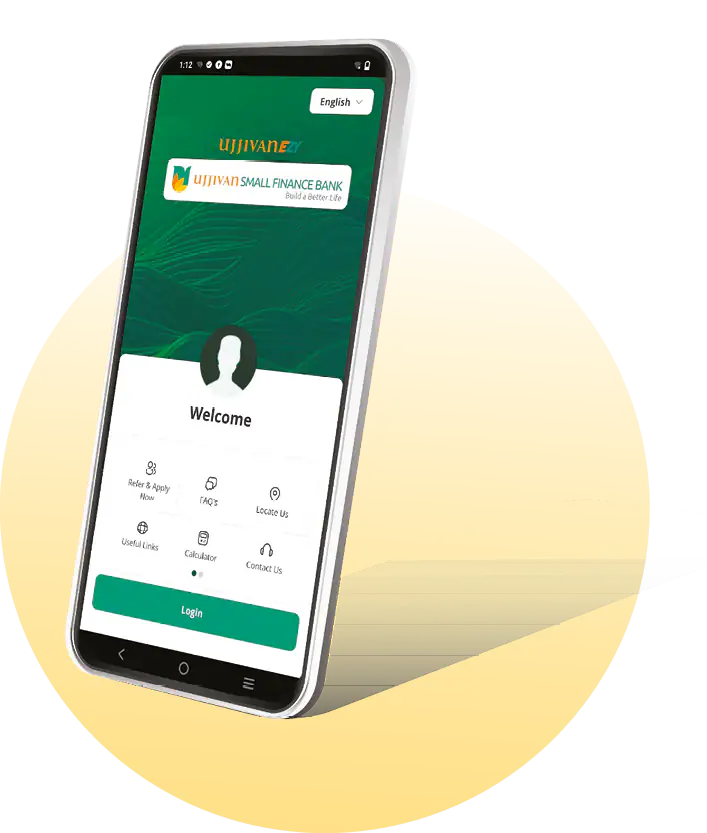
The platform currently offers a broad suite of capabilities across banking, payments, servicing and investment journeys, enabling customers to access products and services through a unified digital interface. During the year, the platform was significantly strengthened through enhancements in customer interface design, journey simplification and ecosystem integration.
These enhancements have enabled customers to seamlessly navigate across savings, deposits, payments, investments and servicing journeys through integrated digital touchpoints. Continuous improvements in interface design, navigation architecture and self-service capabilities further strengthened usability and customer engagement. Planned integration of UPI capabilities within the EZY platform is expected to further improve transaction convenience and ecosystem integration.
Strengthening Digital Onboarding and Assisted Customer Journeys
Digital onboarding initiatives during the year focused on improving onboarding efficiency, reducing processing timelines and widening access across customer segments. End-to-end paperless onboarding journeys across savings accounts, current accounts and deposit products enabled faster account opening, lower documentation dependency and smoother fulfilment across customer journeys. Workflow integration and backend processing improvements also supported better turnaround time and operational throughput.
Integration of onboarding capabilities with assisted banking journeys enabled branch and field teams to guide customers through digital interactions, particularly first-time formal banking users and customers gradually moving towards digital channels. Product suitability frameworks embedded within onboarding journeys supported more contextual and customer-relevant product selection across customer segments.
The Bank also expanded its digital sourcing strategy through fintech partnerships and affiliate-led acquisition models aimed at improving reach across under-served and semi-urban markets. During FY 2025-26, a partnership with Stable Money enabled sourcing of digital fixed deposits through its platform, contributing deposit mobilisation of ₹24 Crores+ from new-to-bank customers during the year.
Key initiatives during the year included:
- Streamlined digital onboarding journeys across liability products
- Assisted onboarding support across branch and field channels
- Reduced documentation requirements and faster processing timelines
- Workflow and backend integration across onboarding processes
- Fintech-led sourcing partnerships supporting acquisition of new-to-bank customers
- API-based integrations enabling broader ecosystem connectivity and digital servicing capabilities



Appropriate due diligence, onboarding and monitoring frameworks for fintech partnerships remain aligned with regulatory requirements and internal risk management standards. Planned expansion across additional fintech partnerships, API integrations and digitally integrated customer journeys is expected to support wider customer reach, servicing efficiency and scalable digital acquisition across liability and asset businesses.
Driving Digital Adoption and Customer Experience
Digital channels recorded higher adoption across onboarding, servicing and transaction journeys during the year, with a growing share of customer requests fulfilled digitally. This reduced reliance on branch-based servicing while improving turnaround time, responsiveness and servicing convenience across customer segments. Focus areas included simplification of customer journeys, improvement in self-service capabilities and tighter integration across assisted and digital channels to create a more seamless banking experience.
Digital awareness and adoption initiatives during the year included Digi-Sampark and Digi-Kaksha programmes aimed at improving digital capability across branch and field teams, alongside customer communication campaigns promoting usage of Ujjivan EZY Internet and Mobile Banking platforms and digital collections. Customer educational videos for EZY platforms are also under development to improve awareness and usability across digital journeys, while enhancements in workflow integration and servicing architecture supported greater consistency across omni-channel customer interactions.
EnhancingPaymentsandCollectionsCapabilities
The Bank continued to strengthen its digital payments and collections ecosystem through initiatives focused on improving convenience, repayment efficiency and transaction accessibility. Several payment and collection capabilities were introduced and enhanced during the year to support frictionless transaction experiences and strengthen digital collections efficiency.
For loan repayments, enabling automated repayment journeys
UPI AutoPay mandate executions during the year
Active UPI Merchant QR network
UPI AutoPay recurring mandates created
Book value linked to UPI AutoPay mandates
Value processed through UPI AutoPay executions
enabling transfers through mobile number and bank name
These initiatives contributed to higher digital transaction volumes, improved repayment efficiency and reduction in delinquency risks. Transaction capabilities were further strengthened through payment gateway integrations and ecosystem partnerships, enabling a more seamless and integrated payment experience for customers.
ExpandingtheDigitalProductEcosystem
The Bank continued to expand its digital ecosystem through integration of investment, rewards and protection capabilities within customer journeys. These initiatives are enabling customers to access a wider range of financial solutions through integrated digital channels while strengthening engagement and fee-based income opportunities.
A key development during the year was the enablement of Mutual Fund investment capabilities within the digital banking ecosystem, allowing customers to access investment solutions through integrated journeys.
The Ujjivan Rewardz platform was also integrated within the EZY application, strengthening customer engagement and encouraging deeper participation across digital channels. Additionally, the Bank introduced a fully digital standalone insurance purchase journey on the Hello Ujjivan platform, enabling customers to access protection products without dependency on branch-based servicing.
AdvancingAutomationandProcessTransformation
Automation and workflow transformation remained key focus areas during the year, supporting operational efficiency, scalability and improved service delivery across functions.
The Bank introduced 21 new automation initiatives and enhanced several existing workflows, taking the total number of automated processes to 69.
Automation initiatives covered onboarding, servicing, workflow management and backend operational processes. These enhancements improved turnaround times, strengthened productivity and enabled greater consistency across operational workflows.
Cost savings exceeding
FTE savings
StrengtheningPlatformIntegrationsandEcosystemPartnerships
The Bank continued to strengthen its ecosystem architecture through platform integrations and strategic partnerships aimed at improving customer reach, accessibility and service integration.
Key initiatives included:
- Integration with payment gateway partners for seamless transaction capabilities
- Fintech partnerships supporting digital deposit sourcing
- SDK and API-based integrations enabling ecosystem connectivity
- Enhanced marketing automation and analytics capabilities
These initiatives improved time-to-market, strengthened digital sourcing capabilities and enhanced integration between customer journeys, digital platforms and partner ecosystems.
Outlook
Digital banking investments over the coming period will be directed towards improving customer acquisition, servicing efficiency, payments capability and platform integration across both retail and business banking segments. Key initiatives underway include:
- Assisted onboarding journeys for non-individual liability customers to improve onboarding efficiency and servicing experience
- Expansion of merchant solutions and transaction banking capabilities across business banking segments
- Unified lead and prospect management framework to improve customer acquisition, tracking and conversion effectiveness
- Automation and digitisation of acquisition and servicing journeys across asset businesses to improve turnaround time and operational efficiency
- Customer experience improvements through UI/UX enhancements
- Rollout of 50+ new features across the Ujjivan EZY App to expand digital servicing and customer engagement capabilities
Technology investments are also being aligned towards a scalable, agile and open architecture capable of supporting growth across liabilities, assets, payments and partnership ecosystems. Strategic priorities include:
- Agile delivery models to improve responsiveness to evolving customer expectations and business requirements
- Consolidation of services across business units to improve scalability, optimise costs and build specialised digital capabilities
- Analytics-led and digital interventions supporting stronger portfolio monitoring, underwriting effectiveness and portfolio quality
- Data-driven decision frameworks, ecosystem partnerships and Digital Public Infrastructure-linked business models supporting customer acquisition, engagement and business growth
- Audience segmentation, attribution models and digital marketing capabilities to improve campaign effectiveness and customer engagement quality
- Digital adoption programmes aimed at accelerating migration towards self-service and digital-first customer behaviour across products and channels
- Financial and digital inclusion initiatives across customer segments and operating geographies
The digital roadmap is expected to contribute through lower operating costs, faster turnaround times, improved customer experience, stronger portfolio quality and expansion of partnership-led revenue streams. As customer behaviour and digital ecosystems evolve, the Bank's focus remains on building a more integrated, responsive and scalable banking experience across assisted, physical and digital touchpoints.

DataAnalyticsandDecisionIntelligence
The Bank’s approach to data and analytics is built around developing a deeper and more contextual understanding of customer behaviour across the lifecycle. Given the nature of the customer segments served by the Bank, financial journeys often evolve progressively and cannot be understood through a single product relationship or conventional credit lens alone. Customers may demonstrate changing income patterns, improving repayment behaviour, growing savings or business-linked cash flows that mature over time.
In this context, the Bank is increasingly adopting a customer 360° lifecycle view spanning acquisition, activation, deepening, protection, recovery and retention. This lifecycle-led framework is strengthening decision-making across business, customer engagement and portfolio management functions, enabling more targeted interventions and stronger alignment between customer opportunity, relationship quality and long-term value creation.

StrengtheningBusinessDecisioning
Analytics capabilities are playing an increasingly important role in sharpening how the Bank identifies growth opportunities and allocates business focus across markets, branches and customer segments.
Customer acquisition, onboarding, origination, balance build-up and account upgrade journeys are becoming progressively more targeted and aligned to customer engagement patterns and lifecycle potential. These insights are also supporting more refined branch and micro-market strategies, enabling stronger alignment between sourcing priorities, portfolio quality and long-term relationship value.
Analytics-led applications include:
- Branch and micro-market opportunity assessment
- Customer acquisition and onboarding prioritisation
- Relationship-led portfolio deepening
- Behavioural trend and portfolio quality analysis
- Alignment of growth and portfolio outcomes
EnhancingCustomerEngagementAcrosstheLifecycle
The lifecycle lens also shapes how customer relationships are managed over time. Customer actions across onboarding, activation, savings build-up, account upgrades, cross-sell opportunities and retention journeys are increasingly analysed through behavioural and engagement indicators. This enables the Bank to engage customers with greater continuity and contextual relevance across different stages of the relationship lifecycle.
Engagement interventions are becoming progressively better timed and more aligned to evolving customer behaviour, enabling stronger servicing responsiveness and relationship continuity across channels. The increasing integration of analytics within customer engagement processes is also improving visibility into portfolio evolution, customer actions and engagement effectiveness across the franchise.
RiskDecisioningandPortfolioOversight
Across the customer lifecycle, data and analytics are strengthening portfolio oversight, intervention frameworks and recovery strategies. Analytical models and behavioural insights are increasingly integrated into credit monitoring processes, enabling earlier identification of emerging stress and more timely intervention.
Acquisition and behavioural scorecards support credit decisioning from origination onward, while early warning indicators, fraud triggers, collections decisioning and recovery analytics are improving portfolio visibility and intervention effectiveness.
These capabilities are supporting:
- Earlier identification of stress indicators
- Improved collections and recovery prioritisation
- Stronger portfolio monitoring and intervention
- Better alignment between risk oversight and business actions
- A more forward-looking approach to portfolio protection
The integration of behavioural insights within portfolio monitoring frameworks is enabling more timely intervention and strengthening overall decision quality across credit and recovery processes.
BusinessImpact
Analytics-led interventions continued to deliver measurable operational and strategic impact during FY 2025-26. Initiatives driven through data and analytics contributed an estimated ₹1,100+ Crores of business impact during the year, alongside ₹38+ Crores of loss recovery.
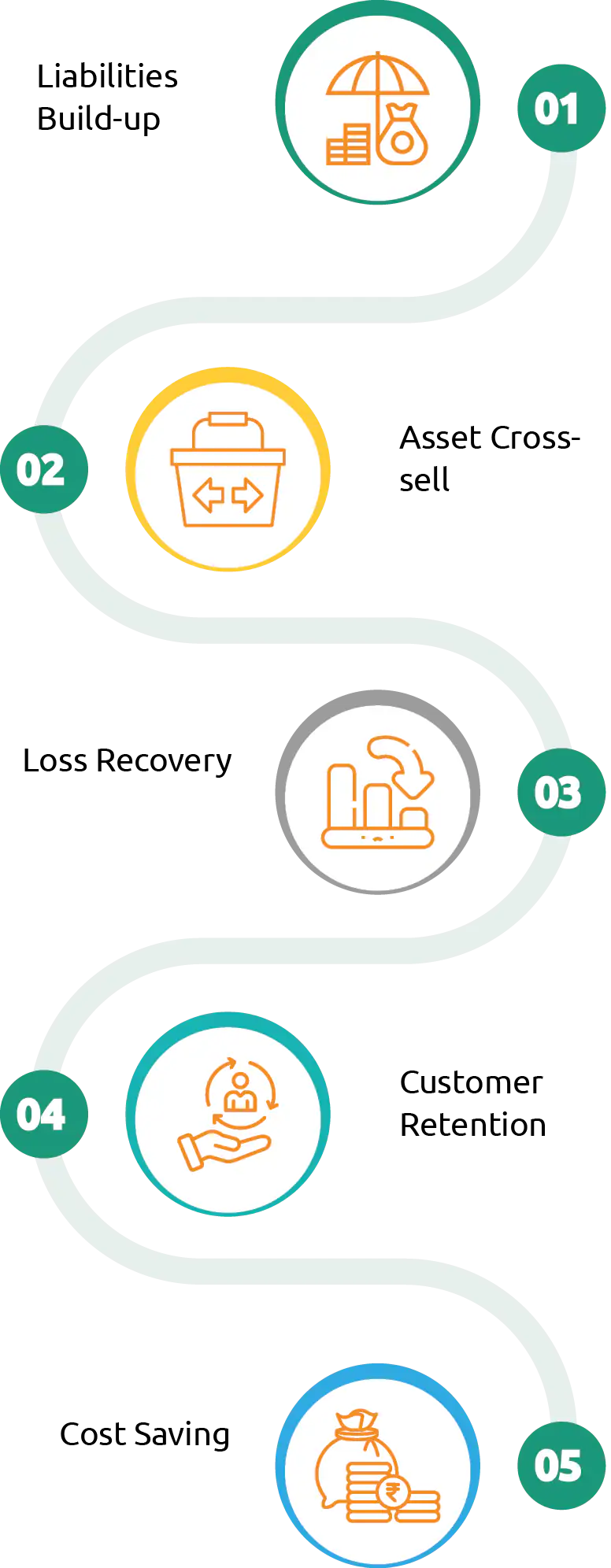
Beyond measurable outcomes, analytics capabilities are also strengthening decision quality across the organisation through sharper targeting, earlier identification of stress or churn indicators and improved frontline execution.