Corporate Social Responsibility
Advancing Aspirations in Our Communities
Our Corporate Social Responsibility (CSR) approach is anchored in enabling inclusive and sustainable development across the communities we serve. The focus remains on moving beyond transactional interventions towards programmes that address underlying structural challenges, with an emphasis on long-term impact, resilience and community capability building.
CSR initiatives are designed to operate across multiple dimensions, including infrastructure development, education, healthcare, livelihood generation, environmental stewardship and disaster response. These interventions are implemented through credible partners, aligned with national priorities and mapped to the United Nations Sustainable Development Goals (UN SDGs), ensuring both relevance and scalability. The Bank continues to strengthen programme design and partner capabilities to ensure that outcomes are sustainable and measurable over time.
Total Beneficiaries
CSR Projects
Total States and UTs
In Aspirational Districts
CSR Budget Allocated
UNSDG Alignment
InfrastructureandCommunityDevelopment
Infrastructure-led interventions remain a key component of the Bank’s community engagement, aimed at creating enabling environments for under-served populations. Through the ‘Chote Kadam’ programme and other community initiatives, the Bank focuses on improving public infrastructure and addressing critical gaps across healthcare centres, schools and local civic bodies.
Key interventions include renovation of public spaces and facilities such as children’s parks, school buildings, Anganwadi kitchens and washrooms, as well as provision of essential infrastructure like benches and mid-day meal sheds across multiple districts including Balada, Lonavada, Narnaul, Bareilly and Jalandhar.
In addition, the Bank executes ‘Procure & Deliver’ projects to address critical infrastructure gaps across government hospitals, public healthcare centres, schools and municipal bodies. These include the provision of ambulances, medical equipment, patient transport vehicles, classroom aids and other essential assets required for effective service delivery.
Total Beneficiaries
Public infrastructure interventions across healthcare, education and civic facilities
LivelihoodDevelopmentandEconomicEmpowerment
Ujjivan SFB’s livelihood interventions are structured to improve income generation capacity and economic resilience among under-served segments, including women, youth and persons with disabilities (PWDs). The Bank focuses on creating sustainable livelihood opportunities through skill development, employability enhancement and entrepreneurship support, enabling beneficiaries to achieve long-term financial independence.
Key initiatives such as Women’s Livelihood Empowerment Programme and Livelihood on Wheels focus on enabling access to livelihood opportunities, improving employability and supporting entrepreneurship. These programmes aim to create sustainable income pathways while strengthening financial independence and long-term economic stability.
Women’s Economic Advancement through Livelihood Empowerment
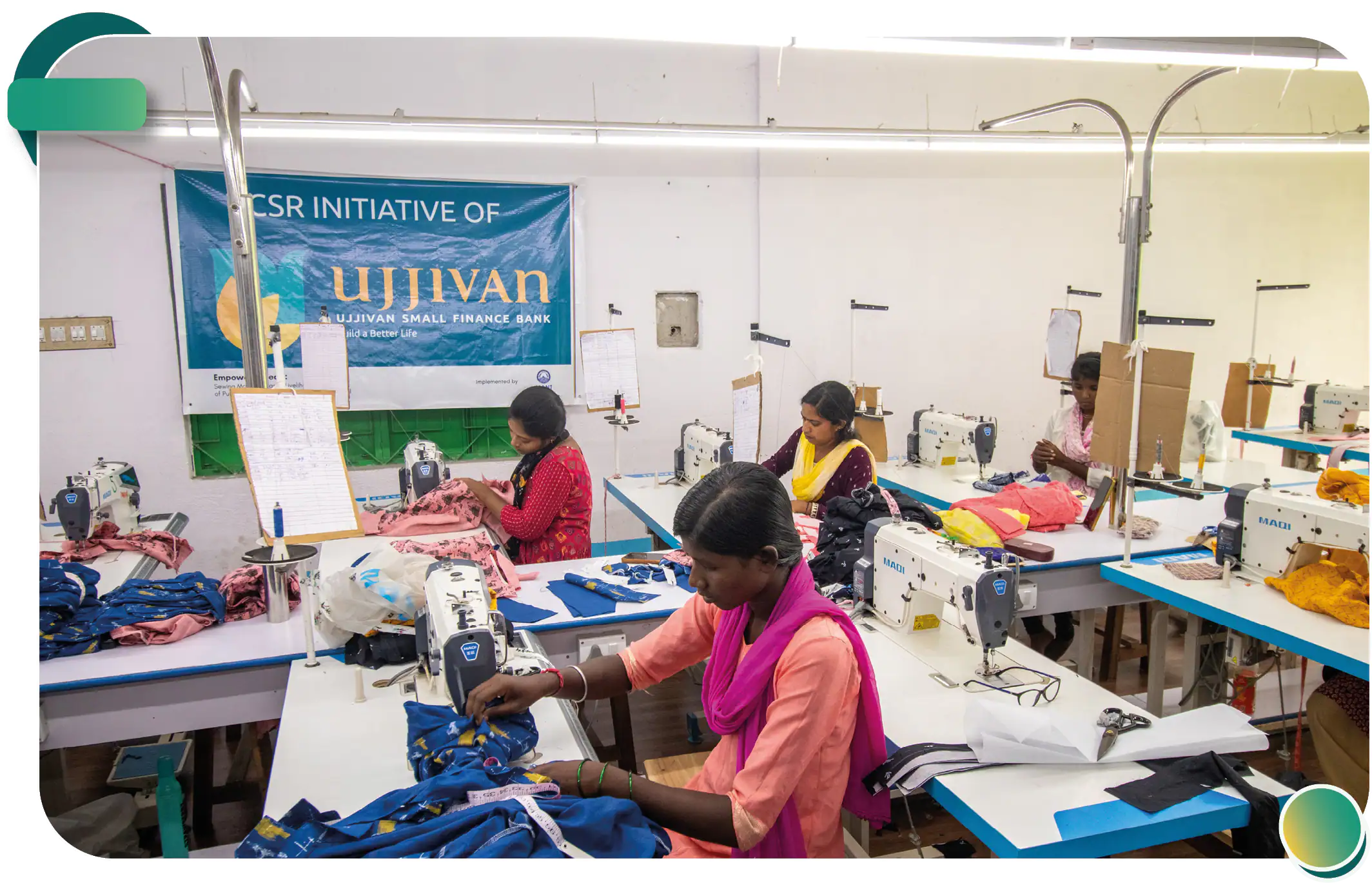
During the reporting period, a dedicated livelihood initiative was undertaken to support the economic empowerment of 50 women from under-served communities in the Puncha block of Purulia district, West Bengal. The programme aimed to strengthen income-generating capabilities through vocational training, access to resources and market linkages.
Participants underwent structured training in basic tailoring, advanced garment construction and production readiness under the guidance of experienced trainers. To facilitate practical learning and income generation, beneficiaries were also provided with sewing machines, tools and raw materials. The intervention has led to improved household incomes, enhanced financial independence and stronger economic participation among the women beneficiaries.
Livelihood on wheels – Empowering Person with Disabilities (PWDs)
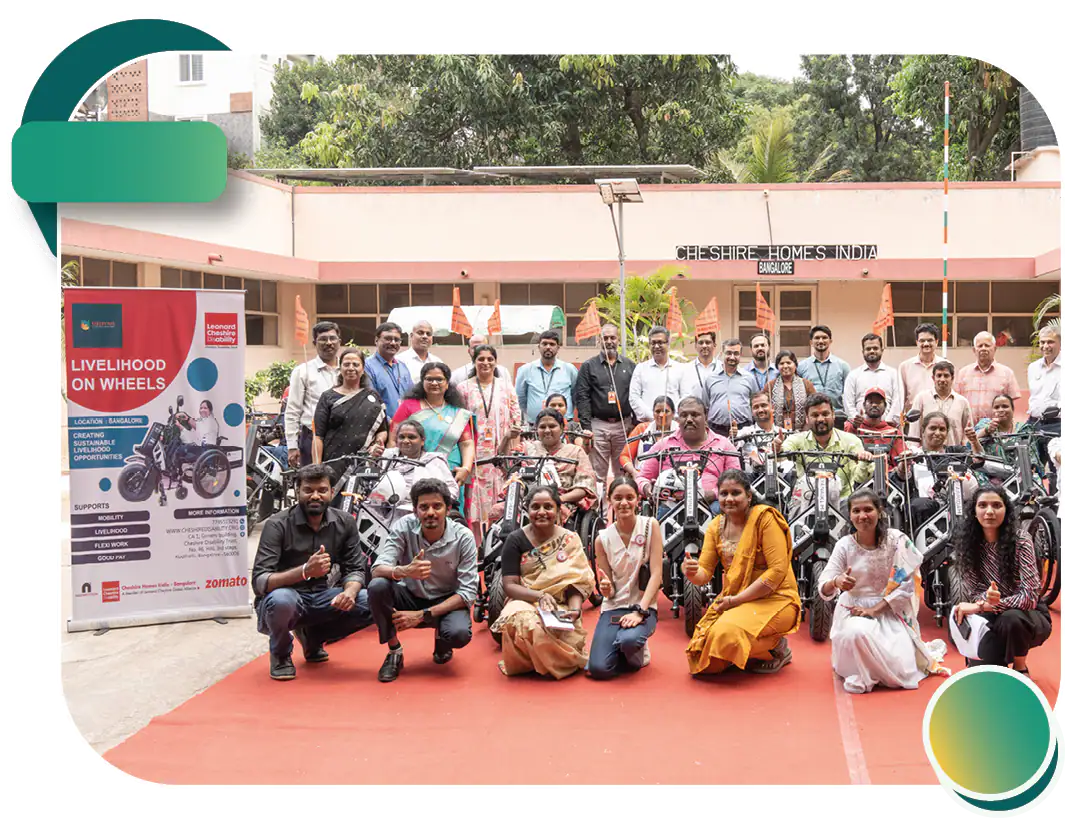
The Livelihood on Wheels initiative aims to create sustainable livelihood opportunities for persons with disabilities through specially designed mobility vehicles. During the year, 30 beneficiaries have been benefited across Bengaluru and Kolkata. Beneficiaries are being trained to enhance their employability and readiness for livelihood opportunities as a delivery partner. The programme is expected to enable participants to earn an average income of approximately 15,000, promoting financial independence, social inclusion, and dignified livelihood.
Supported through livelihood empowerment initiative across the regions
HealthcareandEducationInterventions
Healthcare initiatives are focused on strengthening access to quality medical services in under-served regions. The Bank supports hospitals and public healthcare institutions through the provision of critical medical equipment, rehabilitation infrastructure and patient mobility solutions, enabling improved patient care and service delivery. These interventions contribute to enhance healthcare accessibility, early diagnosis and improved treatment outcomes for vulnerable communities.
In education, interventions are directed at improving access, continuity and quality of learning opportunities for underprivileged and marginalised groups. Through scholarship programmes and targeted educational initiatives, including support for transgender students and technology enabled learning, the Bank promotes inclusive education helps students build capabilities for future success.
Total Beneficiaries
Beneficiaries supported through medical interventions
Students supported through education initiatives
i-Fit Hub at Stanley Medical College, Chennai
An innovative Interactive Fitness (i-Fit) Hub has been established at Stanley Medical College, Chennai, to strengthen rehabilitative healthcare services for children with developmental challenges. Set up within the Institute of Social Paediatrics, the facility is designed to provide accessible and technology-enabled therapy for children from diverse socio-economic backgrounds. The i-Fit Hub integrates advanced game-based rehabilitation systems that support motor, cognitive, sensory and functional development. Equipped with multiple interactive therapy modules, the centre enables structured interventions focused on core strength, limb coordination, sensory integration and response speed.
Setting up of Brain Health Clinics across 32 District Hospitals in Karnataka
In partnership with NIMHANS, the Bank supported the establishment of physiotherapy units in Brain Health Clinics across 32 government district hospitals in Karnataka. The initiative includes procurement of essential therapy equipment to enable early screening of neurological disorders and improve access to timely care at the district level. The intervention is expected to benefit over 60,000 individuals by strengthening early diagnosis, rehabilitation support, and community-level neurological care.
Enhance Patient Mobility at Kidwai Memorial Institute of Oncology, Bengaluru
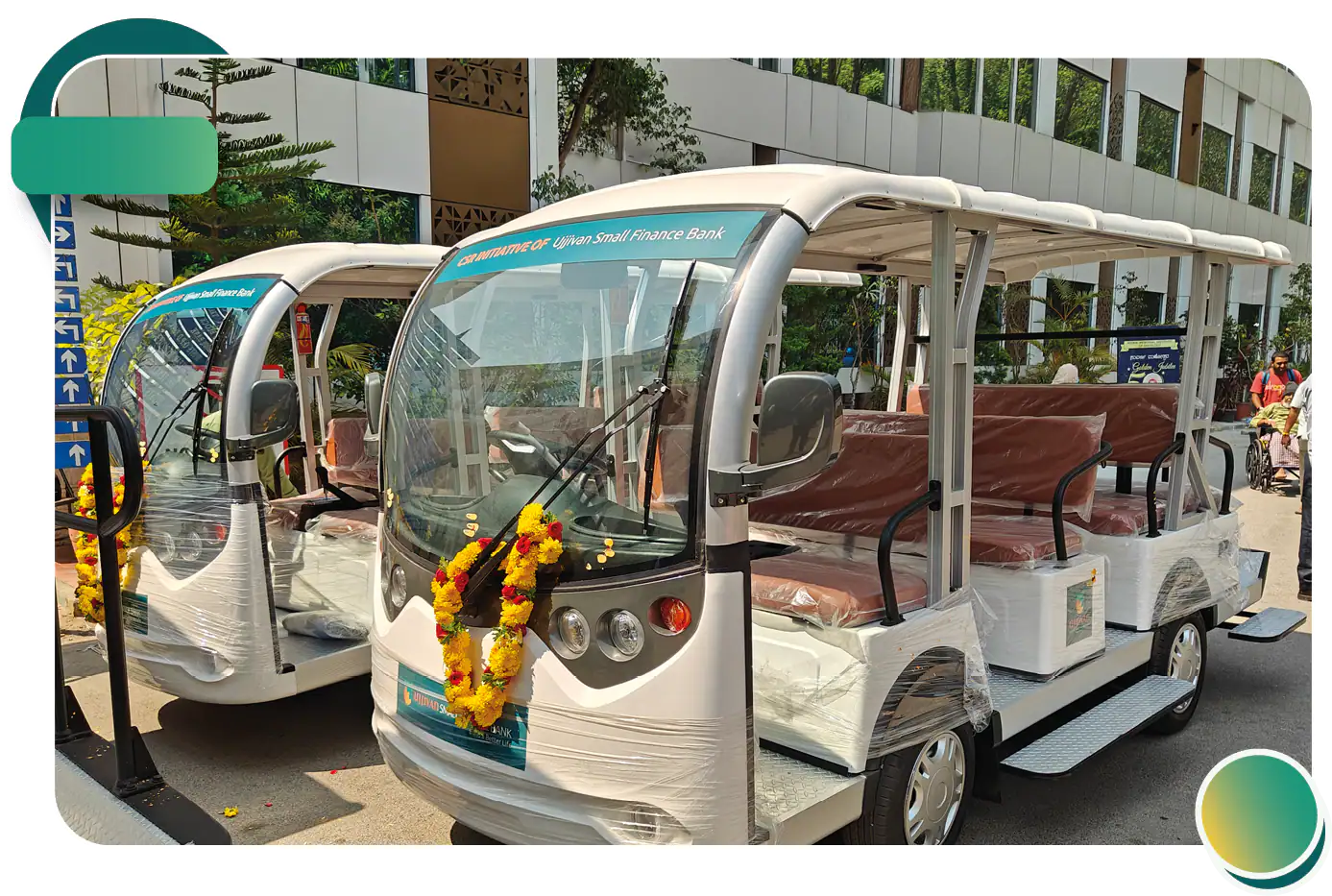
To improve accessibility and patient convenience, the Bank supported the deployment of four electric buggies at Kidwai Memorial Institute of Oncology, Bengaluru. Spread across a campus of over 30 acres, the institute caters to a large number of patients and caregivers who often face mobility challenges while accessing various treatment and support services. The electric buggies facilitate safe and comfortable internal transportation, enhancing the overall patient experience and improving access to healthcare services across the campus. In addition, the initiative promotes environmentally sustainable mobility through the use of clean-energy vehicles.
Technology-enabled Learning for School Students in Maharashtra and Madhya Pradesh
In partnership with Pi Jam Foundation, the Bank supported technology education programmes for primary school students across selected districts of Maharashtra and Madhya Pradesh. The initiative introduced students to coding, computational thinking and problem-solving through interactive and age-appropriate learning modules. By fostering early exposure to technology and digital skills, the programme aims to enhance learning outcomes and equip students with competencies required in an increasingly technology-driven world.
Rejuvenation of Kanekallu Lake at Vagata village, Hoskote, Bangalore
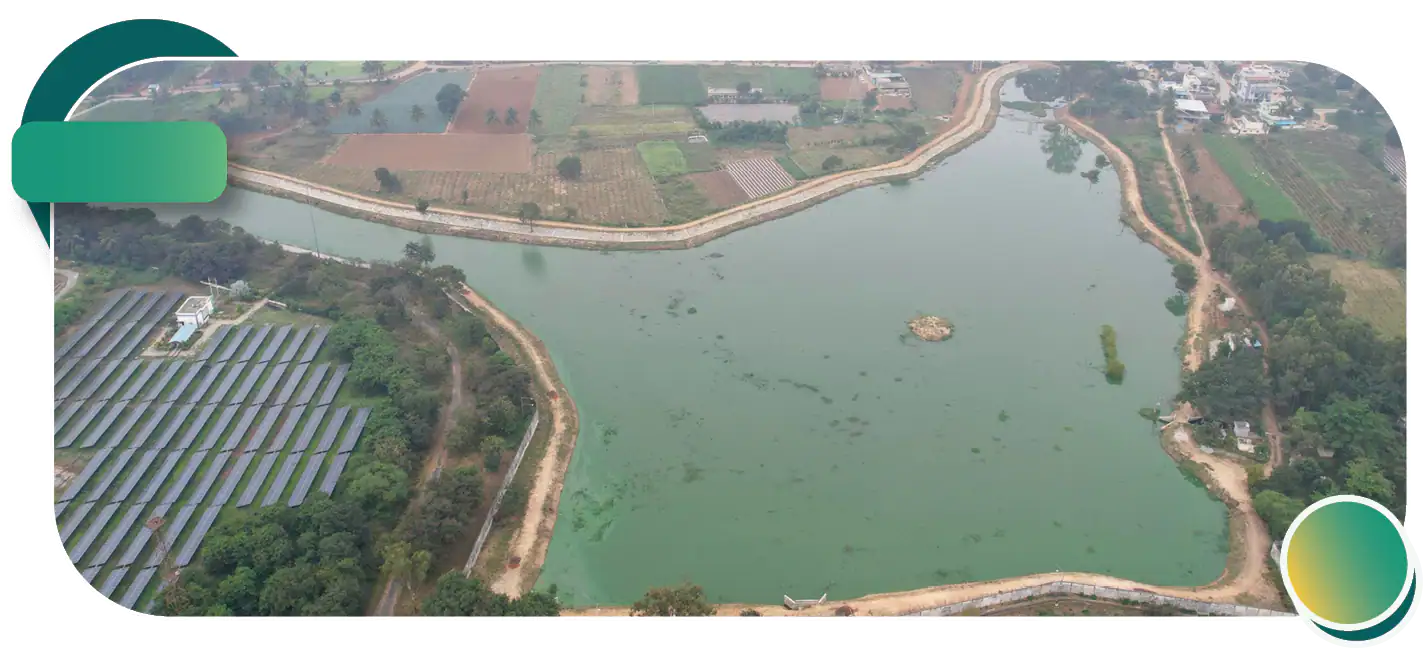
In partnership with United Way of Bengaluru, the Bank undertook the rejuvenation of Kanekallu Lake at Hoskote, to enhance water security, restore ecological balance, and support community resilience. The project benefited 16 villages, 2,031 households and 10,400 individuals through improved water availability and ecosystem restoration. As a part of the rejuvenation effort, 20,000 natives fishing was released to strengthen aquatic biodiversity, while 1,250 saplings were planted around the lake ecosystem. The intervention resulted in an estimated 20% improvement in biodiversity and is expected to contribute approximately 27.25 tonnes of carbon sequestration annually, reinforcing our commitment to climate action and sustainable natural resource management.
EnvironmentalStewardshipandCommunityInitiatives
Environmental sustainability remains an integral component of the Bank’s CSR strategy, with interventions focused on natural resource conservation, ecological restoration and promotion of sustainable practices across communities. These initiatives are implemented through partnerships with United Way of Bengaluru, NABFoundation and Sankalptaru Foundation, contributing to climate resilience, biodiversity conservation and improved environmental outcomes.
Water Bodies Rejuvenated
Water conservation capacity created
Branches Covered under Project Swachh Neighbourhood (A Cleanliness Drive)
Water Body Rejuvenation in Satara, Maharashtra
In partnership with NAB Foundation, and aligned with the vision of catalysing sustainable development, the Bank undertook rejuvenation of three water bodies in Badva village, Khandala Taluka, Satara, Maharashtra. The project involved comprehensive restoration activities including desilting, bund strengthening and measures to address ground and external seepage, resulting in enhanced water retention and increased storage capacity throughout the year, including the summer season.
The rejuvenated water bodies are expected to support water availability for agriculture and community use, benefiting 3,227 individuals across 718 households. The initiative enabled conservation of approximately 79 TCM (million litres) of water, strengthening irrigation potential, improving local water security and contributing to sustainable livelihood enhancement.
Project Swachh Neighbourhood
During the year, the Bank expanded the reach of Project Swachh Neighbourhood across 748 branches, encouraging active employee participation in cleanliness drives, waste management awareness and plantation activities. The initiative fostered environmental responsibility among employees while promoting cleaner and greener neighbourhoods in communities served by Ujjivan SFB.
DisasterReliefandHumanitarianResponse
Supporting communities during times of crisis remains an important component of the Bank’s CSR commitment. Through targeted disaster relief interventions, Bank seeks to address immediate humanitarian needs while supporting with timely and coordinated assistance. The focus remains on providing essential relief to vulnerable population impacted by natural calamities and unforeseen emergencies.
During FY 2025-26, the Bank extended disaster relief support to communities affected by flood and other natural disaster across Punjab, Maharashtra and Himachal Pradesh.
Through timely intervention and local implementation partners, essential dry ration kits and relief material were distributed to affected families, helping address immediate food security and household requirements during period of disruption.
The relief initiative reached more than 12,360 beneficiaries, including over 5,000 families, providing critical support during challenging circumstances.
Total Beneficiaries
StrengtheningImplementationPartnershipsandGovernance
Effective programme delivery is supported through structured engagement with implementation partners, with a focus on strengthening capability, governance and long-term collaboration. During the year, the Bank hosted its first CSR partner summit, "Vruksh", on 7 March 2026, bringing together partner organisations and senior leadership as part of a structured platform to enhance engagement and programme effectiveness. The Bank intends to institutionalise this as an annual forum for continued collaboration and capability building.
The summit featured panel discussions and knowledge-sharing sessions involving the Bank’s senior management and partner organisations, enabling exchange of perspectives and best practices. Focused capacity-building modules were conducted on regulatory compliance, project management and accounting practices, in collaboration with Sattva Consulting, reinforcing the Bank’s commitment to transparency, governance and accountability. An ESG-focused session further strengthened alignment with sustainability principles, supporting integration of environmental and social considerations into programme design and execution.
In addition, the Bank introduced a structured grievance redressal mechanism for CSR partners through an online feedback system. This enables systematic capture of partner inputs, concerns and operational challenges, supporting timely resolution and strengthening programme execution.
VolunteeringandEmployeeEngagement
Employee participation remains an important pillar of the Bank’s community initiatives. Through the Ujjivan Seva Mitra programme, employees actively contribute to CSR initiatives, strengthening engagement and ownership at the organisational level. Employees are recognised through e-certificates for their participation and sustained engagement.
Employees participated
Total volunteering hours
FinancialLiteracyandInclusiveFinance
Recognising financial awareness as a key enabler of inclusion, the Bank continues to implement structured financial literacy programmes across urban and rural regions. These initiatives are designed to educate individuals and communities on savings, responsible borrowing, digital banking and prudent financial planning, thereby supporting long-term economic empowerment and inclusion.
Diksha+ Pro
Focused on under-served communities, particularly women, the programme provides financial education and access to digital tools. With a firm commitment since 2011, these initiatives have impacted several million individuals across India. In FY 2025-26, the programme continued to strengthen adoption of digital repayment methods such as UPI and Hello Ujjivan, reflecting improved financial behaviour and digital inclusion.
Beneficiaries
Total training hours
IL Diksha
This programme supports customers transitioning from group-based lending to individual loan models. The programme covers key areas including financial management, digital banking, financial products, digital fraud prevention, business development, loan management, entrepreneurship and business expansion, enabling improved financial discipline and repayment behaviour.
Beneficiaries
Total training hours
Pragati
The programme addresses financial literacy gaps through targeted training on budgeting, responsible borrowing, digital banking and fraud prevention. Introduced in response to evolving customer needs, including post-crisis environments, the programme continues to drive adoption of digital repayment channels such as UPI and Hello Ujjivan, strengthening financial inclusion.
Beneficiaries
Total training hours
Financial Literacy Camps for Rural Communities
The Bank continues to conduct financial literacy camps across its rural branch areas in line with RBI guidelines, focusing on delivering structured training to rural and under-served communities. These camps are designed to build awareness on core financial concepts, including savings, responsible borrowing and use of formal banking channels, with a strong emphasis on inclusion and participation of women.
Individuals trained
Total training hours
Ujjivan Entrepreneurship Development Programme (MSME)
Designed for MSME customers, this initiative strengthens financial capability and business management skills in line with regulatory expectations. The programme also promotes inclusivity, with strong participation from women entrepreneurs, supporting business sustainability and growth.
Beneficiaries
Total training hours
FLP Beyond Ujjivan
We extended our flagship financial literacy programme beyond our customer base, covering segments such as college students, daily wage workers, SHGs, Anganwadi workers, garbage pickers and other under-served groups. Launched in August 2024, the programme has trained 3,683 individuals, reflecting a 53% increase over the previous year, thereby expanding the reach of financial literacy initiatives.
Individuals trained
E-Vikas Programme
A dedicated financial literacy programme for senior citizens, aimed at bridging the digital divide by enabling adoption of digital banking tools and improving confidence in using secure and accessible financial services, including doorstep banking.
Financial Literacy Week 2026
The Bank observed Financial Literacy Week (FLW) 2026, as initiated by the RBI, from February 09–13, 2026, centred on the theme "KYC – Your first step to safe banking". As part of this initiative, we conducted structured awareness activities across multiple platforms to reach diverse customer segments:
- Posters displayed at branch notice boards
- Digital dissemination through website, internet banking and mobile banking platforms
- Messaging across ATM screens and branch televisions
- Outreach through social media channels
- Financial literacy sessions conducted for 26,528 participants across India
We remain committed to strengthening our financial literacy and CSR initiatives with a focus on improving programme depth, expanding outreach and enhancing impact measurement. Priorities include scaling financial literacy programmes across customer segments, strengthening implementation partner capabilities, integrating sustainability principles into programme design and increasing employee participation in community initiatives. These efforts remain aligned with the Bank’s broader objective of enabling inclusive growth, strengthening community resilience and contributing to long-term socio-economic development.