
What is Microfinance? How Micro Loans Work in India
Disclaimer: This article is for general information/education and is not investment advice. The information is shared in good faith and for general informational purposes only. Ujjivan SFB does not make any representations or warranties regarding the accuracy, completeness, or reliability of the content.
October 27, 2026

Microfinance provides banking and financial services to people who have limited access to traditional banking services and formal credit.



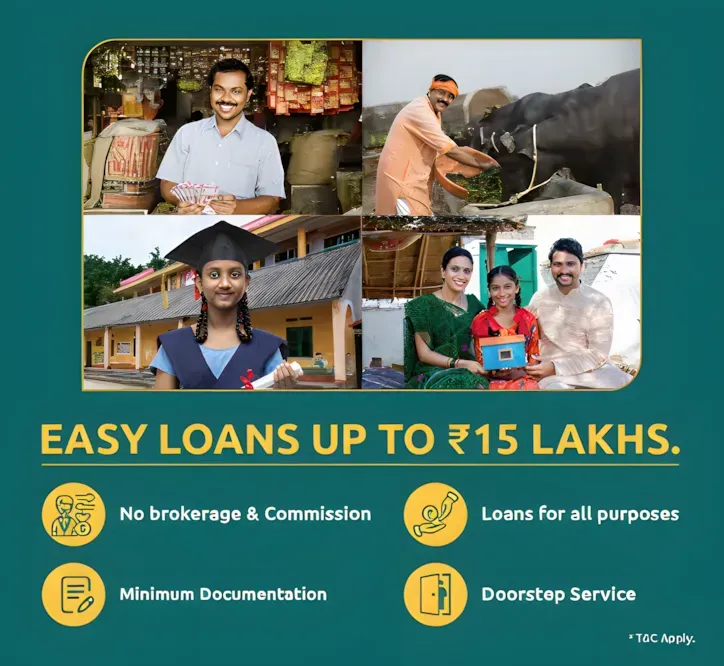




As per RBI rules, microfinance loans are collateral-free loans provided to households with an annual income of up to ₹3 lakh. Since these loans cater to low-income households, they may offer flexible repayment options and be accessible to people with varying credit histories.
Read on to learn how microfinance loans work in India, how much you can borrow, who can apply, what documents you need and more.
How Do Micro Loans Work?
The exact process of how microloans work varies by bank, loan type and your profile. However, the general process includes the following steps:
1. Apply for a Loan
You apply for a microloan through a bank or apply for a government-backed loan scheme through a participating bank. You submit the required application form, documents and supporting details.
2. Verification and Assessment
The bank checks your repayment capacity using details such as bank statements, income proof, where available, and other required documents. Government-backed loans may require additional checks under the relevant scheme.
3. Loan Offer
Based on its assessment, the bank decides whether to approve your application and determines the loan amount, interest rate, repayment tenure, applicable charges and other terms.
4. Loan Disbursal
If you accept the offer, the bank disburses the loan. It may credit the amount to your bank account or pay the relevant beneficiary directly if the loan finances a specific purchase or expense.
5. Loan Repayment
You repay the loan through monthly EMIs or another repayment method agreed upon with the bank, as specified in the loan terms.
6. Loan Closure
Once you repay the full principal and applicable interest and charges, the bank closes the loan.
What Types of Micro Loans are Available?
Microfinance loans can vary based on the type of activity you want to finance, the lender and the loan type. Ujjivan Small Finance Bank offers microloan options for purposes including agriculture, street vending, craft persons, artisans, small businesses, livestock, and more.
The table below lists the available loan categories, their purposes, loan amounts, repayment tenures, and collateral requirements to help you identify which option suits your needs.
Loan category | Purpose | Loan amount | Tenure | Collateral required |
Business, agriculture and allied activities, family needs, water and sanitation | ₹5,000 to ₹1.25 lakh | 6 to 36 months | No | |
Business, agriculture, livestock, home improvement and general-purpose expenses | ₹51,000 to ₹3 lakh | Up to 36 months | Depends on the loan product | |
PM SVANidhi | Working capital for eligible street vendors | Up to ₹50,000 | 12 to 36 months | No |
PM Vishwakarma | Business support for eligible traditional artisans and craftspeople | Up to ₹1 lakh for the first tranche | 18 months for the first tranche | No |
Note: The above details are specific to Ujjivan SFB and may vary based on individual borrower profiles and loan requirements.
Who Can Apply for a Microfinance Loan in India?
To qualify for a microfinance loan under RBI rules, your household’s annual income must be up to ₹3 lakh. You must also meet the following conditions:
How Much Loan Can You Get Through Micro Loans?
Ujjivan Small Finance Bank offers microloans ranging from ₹5,000 to ₹3 lakh across different categories:
What Documents are Required to Get a Micro Loan?
Microloans are collateral-free, so the documentation is often simple. To apply for a micro loan with Ujjivan SFB, you need the following documents:
The bank may ask for additional documents depending on the loan category and purpose.
Do Micro Loans Affect Your Credit Score?
Microloans being collateral-free and having more flexible credit assessment, can lead to the assumption that they do not affect your credit score. However, microloans can be reported to credit bureaus and affect your credit history and score, just like other loans.
Here are a few things to keep in mind:
So, even if you take a small, collateral-free or government-backed microloan, make sure you repay it on time.
How Does Microloan Repayment Work?
Microloan repayment includes the principal amount, interest and any applicable charges. However, the repayment terms may differ from those of regular loans.
What are the Recovery Rules for Micro Loans in India?
The RBI has set rules to ensure banks recover microfinance loans fairly. Here are some key rules borrowers should know:
You must still repay their loans as agreed. If you face repayment difficulties or harassment from recovery agents, contact your bank to discuss your options or file a complaint.
What Other Services are Provided Under Microfinance?
Apart from loans, banks offer other financial services to help low-income households manage their finances and savings.
Final Thoughts
Microloans help low-income households access formal credit for small businesses, agriculture and other financial needs. However, microloans are not interest-free. Although they do not require collateral, you are still required to repay the loan on time.
Use an online loan EMI calculator to check how much you can borrow and how much you can afford to repay.
Disclaimer:
The contents herein are only for informational purposes and generic in nature. The content does not amount to an offer, invitation or solicitation of any kind to buy or sell, and are not intended to create any legal rights or obligations. This information is subject to updation, completion, amendment and verification without notice. The contents herein are also subject to other product-specific terms and conditions, as well as any applicable third-party terms and conditions, for which Ujjivan Small Finance Bank assumes no responsibility or liability.
Nothing contained herein is intended to constitute financial, investment, legal, tax, or any other professional advice or opinion. Please obtain professional advice before making investment or any other decisions. Any investment decisions that may be made by the you shall be at your own sole discretion, independent analysis and evaluation of the risks involved. The use of any information set out in this document is entirely at the user’s own risk. Ujjivan Small Finance Bank Limited makes no representation or warranty, express or implied, as to the accuracy and completeness for any information herein. The Bank disclaims any and all liability for any loss or damage (direct, indirect, consequential, or otherwise) incurred by you due to use of or due to investment, product application decisions made by you on the basis of the contents herein. While the information is prepared in good faith from sources deemed reliable (including public sources), the Bank disclaims any liability with respect to accuracy of information or any error or omission or any loss or damage incurred by anyone in reliance on the contents herein, in any manner whatsoever.
To know more about Ujjivan Small Finance Bank Products Visit:"https://www.ujjivansfb.bank.in"
All intellectual property rights, including copyrights, trademarks, and other proprietary rights, pertaining to the content and materials displayed herein, belong
to Ujjivan Small Finance Bank Limited or its licensors. Unauthorised use or misuse of any intellectual property, or other content displayed herein is strictly prohibited and the same is not intended for distribution to, or use by, any person in any jurisdiction where such distribution or use would (by reason of that person’s nationality, residence or otherwise) be contrary to law or registration or would subject Ujjivan Small Finance Bank Limited or its affiliates to any licensing or registration requirements.