How Many Points Does a Credit Enquiry Drop Your CIBIL Score?
Disclaimer: This article is for general information/education and is not investment advice. The information is shared in good faith and for general informational purposes only. Ujjivan SFB does not make any representations or warranties regarding the accuracy, completeness, or reliability of the content.
September 03,2026
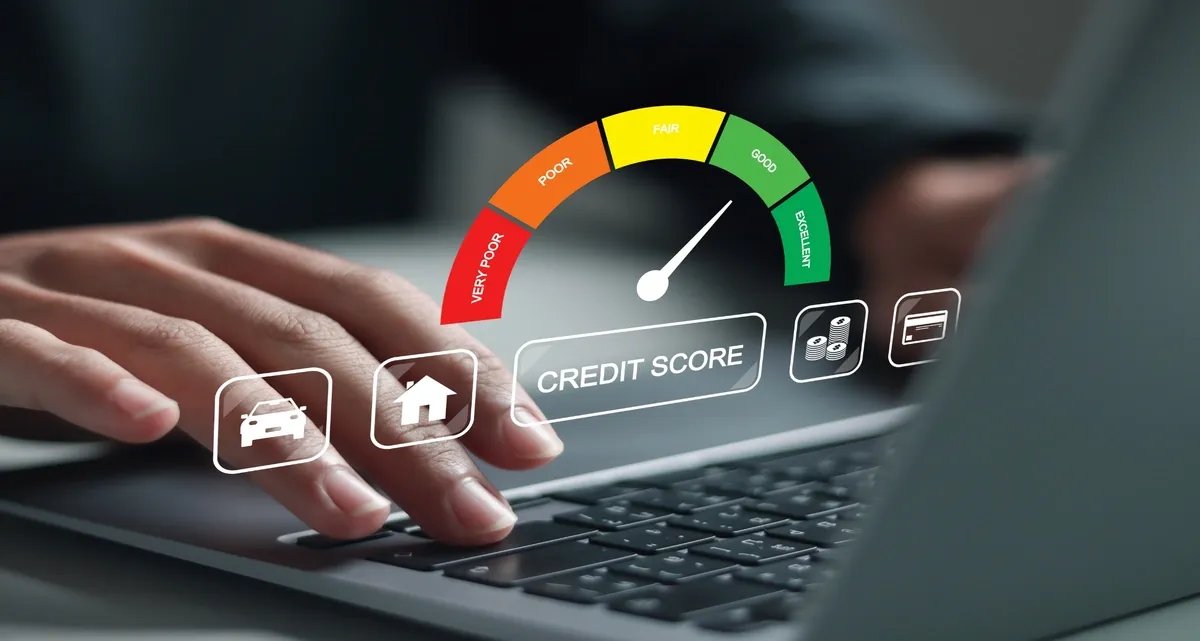
If you have applied for credit recently, you may have noticed a new entry in your CIBIL Report. A hard credit enquiry can have a marginal impact on your CIBIL score, but there is no single, fixed number of points that every enquiry reduces. The actual effect depends on your overall credit profile and how many enquiries you have made recently.
What is a Credit Enquiry?
A credit enquiry is recorded whenever a lender accesses your Credit Information Report to process a loan or credit card application. Every such access shows up in the "Enquiries" section of your CIBIL Report, along with the lender's name and the type of credit applied for. Lenders use this section to understand how often, and how recently, you have sought credit.








Soft Enquiry vs Hard Enquiry: What Is the Difference?
Enquiries fall into two categories. A soft enquiry happens when you check your own CIBIL score or report, or in certain checks that don't involve a formal application. This does not affect your CIBIL score, and you can check your score as often as you like without any impact.
A hard enquiry happens when a lender accesses your report while assessing a loan or credit card application you have submitted. Because a hard enquiry reflects an actual attempt to take on credit, it factors into your CIBIL score, even though the effect is usually small.
How Many Points Can a Credit Enquiry Reduce Your CIBIL Score?
The honest answer is that there is no universally fixed number of points. TransUnion CIBIL does not publish a set deduction for every enquiry. The impact of a single hard enquiry varies from person to person, depending on factors such as the age of your credit history, your repayment record, your credit utilisation, and how many other enquiries appear on your report.
Be cautious of anything online that quotes an exact figure, such as "5 points" or "10 points," for every enquiry. No official source supports a single number that applies uniformly to everyone.
Do Multiple Credit Enquiries Affect Your CIBIL Score?
A single hard enquiry usually has a limited effect. The bigger concern is applying to several lenders within a short span. When multiple hard enquiries appear close together, they can suggest what is described as "credit hungry" behaviour, which lenders may view less favourably. This pattern can affect both your score and how carefully a lender scrutinises your next application.
This does not mean you should avoid comparing credit options. It means it helps to compare terms first and apply formally only once you have narrowed down your choice.
How Long Does a Credit Enquiry Stay on Your CIBIL Report?
A credit enquiry can remain visible in your CIBIL Report for up to 36 months. However, visibility on the report is not the same as ongoing impact on your score. An enquiry's influence on your score is typically strongest in the period soon after it is recorded and tends to matter less as time passes and your credit behaviour continues.
How to Compare Credit Options Without Making Too Many Hard Enquiries
You do not need a hard enquiry just to explore what is available. A few category-neutral approaches can help:
- Start with informal conversations with a lender's representative about eligibility, applicable charges, and documentation, before submitting a formal application.
- Compare published interest rates, fees, and eligibility criteria across lenders online.
- Use eligibility calculators or estimators where available, since these typically do not involve a hard enquiry.
- Ask a lender directly whether a particular check, such as a pre-approval or in-principle offer, will result in a hard enquiry.
How Does Frequent Credit Reporting Affect Credit Enquiries?
The Reserve Bank of India has directed credit institutions to report credit information to credit information companies on a fortnightly basis (as on the 15th and last day of each month), rather than monthly, effective from January 1, 2025. This means updates to your credit information, including new enquiries, can reflect in your CIBIL Report sooner than before.
This should not be confused with enquiries being combined. Fortnightly reporting only changes how quickly information reaches your report; it does not mean multiple enquiries made in the same period are clubbed into one. If different lenders access your report for separate applications, each access is typically recorded as a separate enquiry.
What Should You Do If You Spot an Enquiry You Don't Recognise?
Download your free annual CIBIL Report and review the Enquiries section carefully. If you find an entry you don't recognise, first check whether it could relate to a credit product you availed through a marketplace or partner arrangement, since these can sometimes appear under a different lender name. If it still looks unfamiliar, you can raise a dispute with CIBIL through your online account, or contact the lender named in the enquiry directly. A genuine dispute is reviewed and resolved with the relevant lender.
Final Thoughts
A credit enquiry, particularly a hard enquiry, plays only a small role in your overall CIBIL score. What matters more is avoiding a pattern of frequent applications within a short window. By comparing options thoughtfully before applying formally, you can explore what is available in the market without unnecessarily affecting your credit profile.
Disclaimer:
The contents herein are only for informational purposes and generic in nature. The content does not amount to an offer, invitation or solicitation of any kind to buy or sell, and are not intended to create any legal rights or obligations. This information is subject to updation, completion, amendment and verification without notice. The contents herein are also subject to other product-specific terms and conditions, as well as any applicable third-party terms and conditions, for which Ujjivan Small Finance Bank assumes no responsibility or liability.
Nothing contained herein is intended to constitute financial, investment, legal, tax, or any other professional advice or opinion. Please obtain professional advice before making investment or any other decisions. Any investment decisions that may be made by you shall be at your own sole discretion, independent analysis and evaluation of the risks involved. The use of any information set out in this document is entirely at the user's own risk. Ujjivan Small Finance Bank Limited makes no representation or warranty, express or implied, as to the accuracy and completeness of any information herein. The Bank disclaims any and all liability for any loss or damage (direct, indirect, consequential, or otherwise) incurred by you due to use of or due to investment, product application decisions made by you on the basis of the contents herein. While the information is prepared in good faith from sources deemed reliable (including public sources), the Bank disclaims any liability with respect to accuracy of information or any error or omission or any loss or damage incurred by anyone in reliance on the contents herein, in any manner whatsoever.
To know more about Ujjivan Small Finance Bank Products Visit:"https://www.ujjivansfb.bank.in"
All intellectual property rights, including copyrights, trademarks, and other proprietary rights, pertaining to the content and materials displayed herein, belong to Ujjivan Small Finance Bank Limited or its licensors. Unauthorised use or misuse of any intellectual property, or other content displayed herein is strictly prohibited and the same is not intended for distribution to, or use by, any person in any jurisdiction where such distribution or use would (by reason of that person's nationality, residence or otherwise) be contrary to law or registration or would subject Ujjivan Small Finance Bank Limited or its affiliates to any licensing or registration requirements.
Explore Our Products