How is Gold Loan Value Per Gram Calculated?
Disclaimer: This article is for general information/education and is not investment advice. The information is shared in good faith and for general informational purposes only. Ujjivan SFB does not make any representations or warranties regarding the accuracy, completeness, or reliability of the content.
August 25, 2026

When you apply for a gold loan, the lender assesses how much it can lend against every gram of eligible gold in your jewellery. This amount is called the gold loan value per gram. It is usually lower than the gold rate displayed by jewellery shops.
This is because the lender considers only the intrinsic value of the gold. Making charges, gemstones, design costs and other non-gold materials are not included. Your loan value generally depends on the net gold weight, purity, applicable reference price and loan-to-value ratio.
What Determines the Gold Loan Value Per Gram?
The lender considers four main factors:





Each factor affects how much you can borrow. Two ornaments with the same gross weight may receive different valuations if they have different purity levels or contain different amounts of stones and other materials.
How is the Net Gold Weight Determined?
The lender first weighs your complete ornament to record its gross weight. This weight may include gold as well as:
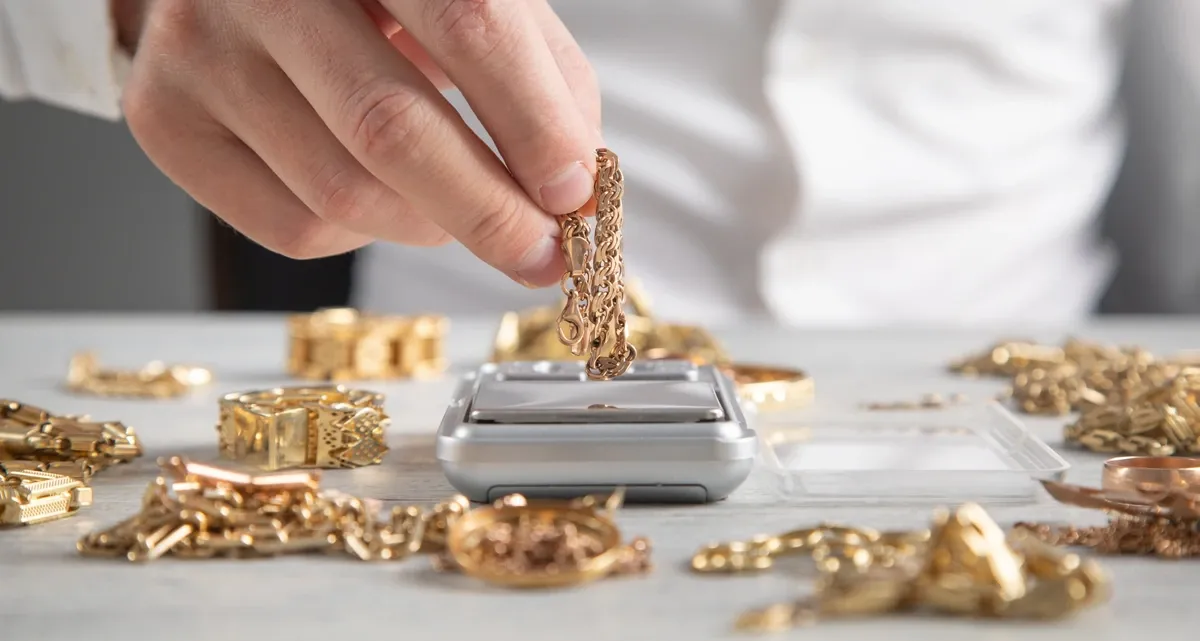
A trained appraiser examines the ornament and estimates the weight of these materials. The estimated non-gold weight is then deducted from the gross weight.
NET WEIGHT FORMULA
Net eligible gold weight = Gross ornament weight − Estimated non-gold weight
For example:
| Particulars | Weight |
|---|---|
| Gross weight of the ornament | 30 grams |
| Estimated non-gold components | 5 grams |
| Net eligible gold weight | 25 grams |
The loan calculation will use 25 grams rather than the full 30 grams. The lender generally does not remove gemstones from your ornament. If the ornament contains extensive stonework or its gold content cannot be assessed reliably, the lender may make a larger deduction or decline to accept it.
Under RBI rules, the appraisal must take place in your presence. The lender must explain the deductions and provide a certificate showing the gross weight, net weight, purity, deductions and assessed value.
How Does Gold Purity Affect the Value?
Gold purity is measured in carats. Pure gold is 24 carats, while jewellery is commonly made using 18-carat, 20-carat or 22-carat gold. The lender tests the purity using its approved appraisal method. A higher purity generally produces a higher assessed value per gram because the ornament contains more gold. If the available reference price is for 24-carat gold, the lender can adjust it to match your ornament's purity:
PURITY-ADJUSTED PRICE
24K reference price x Actual carat / 24
Suppose the 24-carat reference price is ₹10,000 per gram and your jewellery is 22 carats:
Example
₹10,000 x 22 / 24 = ₹9,166.67 per gram
This is the purity-adjusted value before the LTV ratio is applied. If the lender already uses a published reference price for 22-carat gold, the purity fraction should not be applied again.
Disclaimer: The above calculation is for illustrative purposes only. Ujjivan does not take responsibility for the accuracy of the information provided herein. Please contact the bank to know more about your gold loan eligibility.
Which Gold Price Does the Lender Use?
Under the RBI framework applicable from 1 April 2026, the lender must use the lower of:
The rate must be published by the India Bullion and Jewellers Association or a commodity exchange regulated by SEBI. This method helps reduce the effect of short-term price movements. It also means that the lender's reference rate may be lower than the retail gold price you see on the application date.
How is the Gold Loan Value Per Gram Calculated?
If the starting reference rate is for 24-carat gold, you can use this formula:
LOAN VALUE PER GRAM
24K reference price per gram x (Actual purity / 24) x LTV ratio
If the reference price already corresponds to your gold's actual purity, use:
PURITY-SPECIFIC FORMULA
Purity-specific reference price x LTV ratio
The total estimated loan amount is:
TOTAL LOAN FORMULA
Net eligible gold weight x Loan value per gram
Gold Loan Calculation Example
Suppose you pledge jewellery with the following details:
| Input | Value |
|---|---|
| Gross ornament weight | 55 grams |
| Non-gold components | 5 grams |
| Net eligible gold weight | 50 grams |
| Purity | 22 carats |
| Applicable 22-carat reference price | ₹9,000 per gram |
| Applicable LTV | 80% |
First, calculate the assessed gold value:
ASSESSED GOLD VALUE
50 grams x ₹9,000 = ₹4,50,000
Next, calculate the loan value per gram:
LOAN VALUE PER GRAM
₹9,000 x 80% = ₹7,200 per gram
Finally, calculate the estimated loan amount:
ESTIMATED LOAN AMOUNT
50 grams x ₹7,200 = ₹3,60,000
Based on these figures, your estimated loan value is ₹7,200 per gram and your total eligible loan amount is ₹3.60 lakh. The final amount may be lower if the lender applies a lower LTV under its internal policy.
Disclaimer: The above calculation is for illustrative purposes only. Ujjivan does not take responsibility for the accuracy of the information provided herein. Please contact the bank to know more about your gold loan eligibility.
How Does the LTV Ratio Affect Your Gold Loan?
The loan-to-value ratio (LTV) is the percentage of the assessed gold value that the lender can offer as a loan. For consumption gold loans, the current RBI ceilings are:
| Total consumption loan amount per borrower | Maximum LTV |
|---|---|
| Up to ₹2.5 lakh | 85% |
| Above ₹2.5 lakh and up to ₹5 lakh | 80% |
| Above ₹5 lakh | 75% |
These percentages are maximum limits. Your lender may offer a lower LTV based on its policies, the selected scheme and the repayment structure. For a bullet-repayment loan, where both principal and interest are payable at maturity, the lender must consider the total amount repayable at maturity while calculating the LTV.
Why Can the Per-Gram Value Differ Between Lenders?
You may receive different per-gram quotations from two lenders even when you pledge the same jewellery. The difference may arise from:
An advertised high value per gram does not always mean that the gold loan is less expensive. You should also compare the interest rate, processing and appraisal charges, repayment method, tenure and auction terms.
Final Thoughts
Your gold loan value per gram is based on the gold content of your jewellery, not its purchase price or retail value. The lender first determines the net eligible weight and purity, applies the prescribed reference price and then uses the applicable LTV ratio.
Before accepting the loan, check the appraisal certificate provided by the lender. Confirm the gross weight, deductions, net weight, purity and assessed value recorded in it. This will give you a clear view of how your final loan amount was calculated.
Disclaimer:
The contents herein are only for informational purposes and generic in nature. The content does not amount to an offer, invitation or solicitation of any kind to buy or sell, and are not intended to create any legal rights or obligations. This information is subject to updation, completion, amendment and verification without notice. The contents herein are also subject to other product-specific terms and conditions, as well as any applicable third-party terms and conditions, for which Ujjivan Small Finance Bank assumes no responsibility or liability.
Nothing contained herein is intended to constitute financial, investment, legal, tax, or any other professional advice or opinion. Please obtain professional advice before making investment or any other decisions. Any investment decisions that may be made by you shall be at your own sole discretion, independent analysis and evaluation of the risks involved. The use of any information set out in this document is entirely at the user's own risk. Ujjivan Small Finance Bank Limited makes no representation or warranty, express or implied, as to the accuracy and completeness of any information herein. The Bank disclaims any and all liability for any loss or damage (direct, indirect, consequential, or otherwise) incurred by you due to use of or due to investment, product application decisions made by you on the basis of the contents herein. While the information is prepared in good faith from sources deemed reliable (including public sources), the Bank disclaims any liability with respect to accuracy of information or any error or omission or any loss or damage incurred by anyone in reliance on the contents herein, in any manner whatsoever.
To know more about Ujjivan Small Finance Bank Products Visit:"https://www.ujjivansfb.bank.in"
All intellectual property rights, including copyrights, trademarks, and other proprietary rights, pertaining to the content and materials displayed herein, belong to Ujjivan Small Finance Bank Limited or its licensors. Unauthorised use or misuse of any intellectual property, or other content displayed herein is strictly prohibited and the same is not intended for distribution to, or use by, any person in any jurisdiction where such distribution or use would (by reason of that person's nationality, residence or otherwise) be contrary to law or registration or would subject Ujjivan Small Finance Bank Limited or its affiliates to any licensing or registration requirements.
Apply for Gold Loan