
Comprehensive Guide to TDS: Understanding Tax Deducted at Source
Disclaimer: The information is shared in good faith and for general informational purposes only. Ujjivan SFB does not make any representations or warranties regarding the accuracy, completeness, or reliability of the content.
November 26, 2024
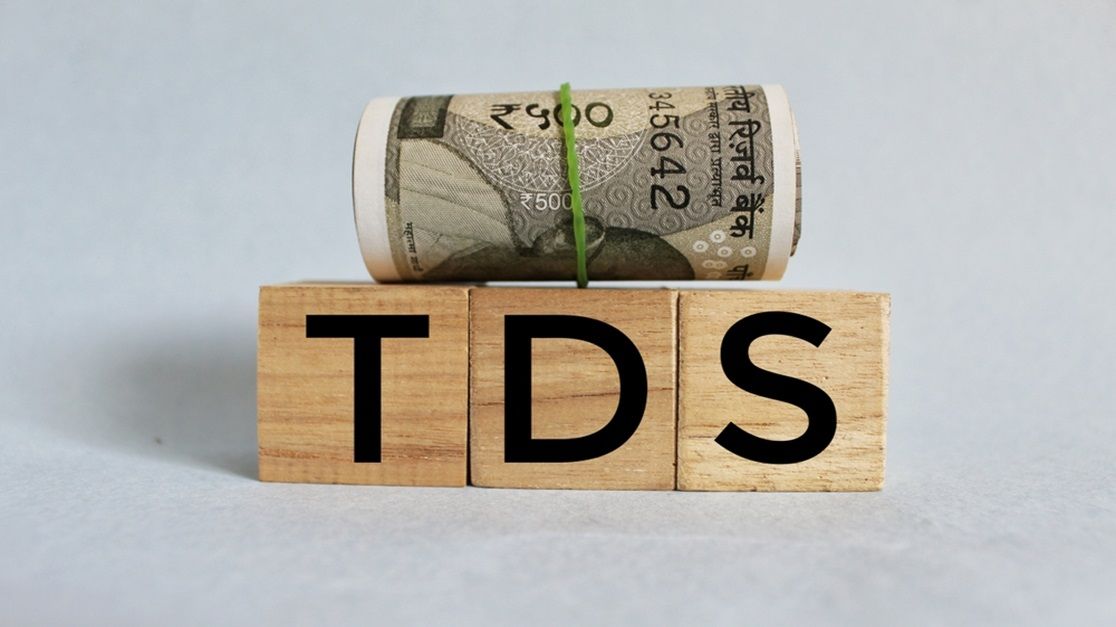
Are you aware of the recent reductions in the TDS (Tax Deducted at Source) rates for certain transactions? The Finance Bill has approved changes in TDS rates, which have led to lower rates from 5% to 2% for transactions falling under Section 194 IB. Well, what exactly is TDS and how does it impact your earnings?






If you're a salaried individual, you may have noticed that a portion of your income is deducted as tax before you receive it. This is called Tax Deducted at Source (TDS). Understanding TDS is crucial because it affects various aspects of your financial life, from investments to rental income. In this comprehensive guide, we will demystify TDS and explain how it works under the Income Tax Act. We'll cover everything from the basics of what TDS is to its implications for different types of income. By the end, you'll have a clear understanding of TDS and its role in tax deduction.
What is TDS?
TDS is a mechanism that allows the Government of India to collect taxes at the source of income. A certain percentage, as mandated in the Income Tax Act, 1961, is deducted from the source. The deducted amount is then remitted to the government on behalf of the recipient. TDS is applicable to various types of payments such as salaries, interest on fixed deposits, rent, professional fees, and more.
Process of Deduction and Payment of TDS
The Income Tax Act provides clear guidelines on the deduction and payment of TDS. Here's an overview of the process:
- TAN Registration: Entities responsible for deducting and remitting TDS are required to obtain a unique TAN (Tax Deduction and Collection Account Number) from the Income Tax Department.
- Determining Applicable Rates: The government sets specific rates for each type of payment subject to TDS. These rates can vary depending on various factors such as the nature of income and recipient's profile.
- Deduction and Remittance: The deductor is responsible for deducting the specified amount as TDS from the payment made to the recipient. The deducted amount should be remitted to the government within prescribed timelines.
- Issuing TDS Certificate: After deducting and remitting TDS, the deductor must issue a TDS certificate to the recipient as proof of tax deduction. This certificate contains details such as the deductor's name, PAN (Permanent Account Number), and TAN.
Implications of TDS on Different Types of Income
Let us now understand how tax deduction works for different income types.
1. Salary Income
TDS on salary is deducted by employers based on the individual's income slab and other exemptions claimed by the employee. The employer issues a Form 16, which provides details of the TDS deducted and enables employees to file their income tax returns. Salaried TDS follows income-tax slab rates, starting as low as 0–5% (depending on the total income and applicable rebates) and going up to 30%.
2. Interest Income
Banks and financial institutions deduct TDS on interest earned from deposits at the following rates:
| TDS rate on Interest on Deposits for Residents | TDS rate on Interest on Deposits for Non-Residents | |
| Section | 194 A | 195 |
| Threshold | TDS shall not be deducted if interest income payable to customers does not exceed ₹50,000.
| No threshold. |
| TDS Rate | 10% | 30% plus surcharge and cess |
| TDS Rate in case payee does not provide PAN or PAN is inoperative | 20% | 20% plus surcharge and cess |
Please Note: for interest from non-bank sources (e.g. corporate deposits), the old ₹10,000 threshold still applies. Also, Section 194A does not apply to Non Residents – interest paid to NRIs is covered under Section 195 or special provisions.
3. Rental Income
Under Section 194I, the payer (other than individual/HUF exempt under limits) must deduct TDS on rent of plant/machinery at 2%, and on rent of land/building/furniture at 10%. The threshold for deduction under Section 194I is₹6 lakhs per year (₹50,000 per month) starting FY2025–26.
Section 194I applies to any person or entity paying rent to a resident Indian, except for individuals and Hindu Undivided Families (HUFs) whose business turnover or professional gross receipts did not exceed the tax audit limits (₹1 crore for business, ₹50 lakh for profession) in the preceding financial year.
Entities Liable for Tax Audit (Companies, Firms, audited Individuals/HUFs, etc.): Must deduct TDS if the total annual rent paid exceeds ₹6,00,000 per financial year.
Individuals and HUFs Not Liable for Tax Audit: Are covered under a separate provision, Section 194IB, and must deduct TDS if the monthly rent exceeds ₹50,000.
| Type | TDS Rate |
| Rent from plant and machinery, equipment | 2% |
Rent from land, building, and furniture | 10% |
4. Professional Fees or Technical Fees
Professionals such as doctors, lawyers, and consultants who receive professional fees, technical services offered to clients in the field of management and consulting, and royalty payments are subject to TDS. The payer deducts TDS at following rates if the total fees paid exceed ₹50,000 in a financial year.
| Type | TDS Rate |
| Technical Fees | 2% |
| Royalty | 10% |
| Professional Fees | 10% |
| If payee does not furnish PAN | 20% |
5. Cash Withdrawal
According to Section 194N of the Income Tax Act, banks must deduct tax from total cash withdrawals that exceed a certain limit as follows:
| TDS Rate | Persons who have not filed income tax returns for the past 3 years | Persons who have filed income tax returns for the past 3 years |
Threshold | ||
| Up to ₹20 lakhs | Nil | Nil |
| ₹20 lakhs to ₹1 crore | 2% | Nil |
| Above ₹1crore | 5% | 2% |
TDS on Fixed Deposit and Recurring Deposit Interest
As per the income tax rules, if your interest income pertaining to FD and/or RD exceeds ₹50,000 (₹1 lakh for senior citizens) in a financial year, a TDS of 10% would be deducted by the bank. That said, if your income is below the minimum tax slab, you can submit Form 15G (Form 15H for senior citizens) to the bank requesting them not to deduct TDS on the interest income.
Please note that effective April 1, 2026, Form 121 will be the new unified self-declaration form in India, replacing forms 15G and 15H. It enables individuals to receive income (like bank interest) without Tax Deducted at Source (TDS) if their total estimated annual income is below the taxable limit.
TDS on Sale of Immovable Property (Section 194-IA)
When a resident individual or HUF buys immovable property (except rural agricultural land) for ₹50 lakh or more, they must deduct TDS at 1% of the sale consideration. This TDS is deposited via Form 26QB and a Form 16B certificate is issued to the seller (If PAN of seller is not given, TDS is 20%.)
Filing TDS Returns
Individuals or entities that deduct TDS are required to file quarterly returns detailing the amounts deducted and deposited. These returns must include:
- Tax Deduction and Collection Account Number (TAN)
- Total amount of TDS deducted
- Nature of payment
- Permanent Account Number (PAN) of deductees
Failure to comply with these requirements can lead to penalties and interest charges on unpaid amounts.
Due Dates for Deducting TDS
Under current law (Finance Act 2023 onward), almost all monthly TDS deposits (including rent/property) are due by the 7th of the next month(with the March deposits due by April 30). For example, a deduction in May 2025 is payable by 7th June 2025. Only the March quarter TDS return is filed by May 31.
For employers (salary TDS), the deposit remains by the 7th of the following month (March TDS by April 30).
Claiming TDS Credit and Refunds
TDS deducted by employers or other entities is reflected in your Form 26AS, which serves as your tax credit statement. You can claim this TDS credit while filing your income tax return. If the TDS deducted exceeds your actual tax liability, you are eligible for a refund.
For instance, if Ravi's total tax liability is ₹50,000 and his employer deducts ₹60,000 as TDS during the year, he can claim a refund of ₹10,000 while filing his income tax return.
Final Thoughts
Understanding TDS is essential for maintaining financial discipline and ensuring compliance with tax regulations. By grasping the basics of TDS, you can effectively plan your finances and avoid any surprises during the tax filing season. Remember to keep track of your TDS deductions, claim the credit while filing your income tax return, and ensure that you meet your tax obligations.
If you're just starting out in your savings journey, opening a Savings Account with Ujjivan Small Finance Bank can be a good start. We have a wide variety of Savings Accounts catering to different financial needs - sign up for the one that meets your financial goals. Alternatively, you can browse through Ujjivan SFB product suite - our wide range of financial products are designed to make your financial life better.
Disclaimer:
The contents herein are only for informational purposes and generic in nature. The content does not amount to an offer, invitation or solicitation of any kind to buy or sell, and are not intended to create any legal rights or obligations. This information is subject to updation, completion, amendment and verification without notice. The contents herein are also subject to other product-specific terms and conditions, as well as any applicable third-party terms and conditions, for which Ujjivan Small Finance Bank assumes no responsibility or liability.
Nothing contained herein is intended to constitute financial, investment, legal, tax, or any other professional advice or opinion. Please obtain professional advice before making investment or any other decisions. Any investment decisions that may be made by the you shall be at your own sole discretion, independent analysis and evaluation of the risks involved. The use of any information set out in this document is entirely at the user’s own risk. Ujjivan Small Finance Bank Limited makes no representation or warranty, express or implied, as to the accuracy and completeness for any information herein. The Bank disclaims any and all liability for any loss or damage (direct, indirect, consequential, or otherwise) incurred by you due to use of or due to investment, product application decisions made by you on the basis of the contents herein. While the information is prepared in good faith from sources deemed reliable (including public sources), the Bank disclaims any liability with respect to accuracy of information or any error or omission or any loss or damage incurred by anyone in reliance on the contents herein, in any manner whatsoever.
To know more about Ujjivan Small Finance Bank Products Visit:"https://www.ujjivansfb.bank.in"
All intellectual property rights, including copyrights, trademarks, and other proprietary rights, pertaining to the content and materials displayed herein, belong
to Ujjivan Small Finance Bank Limited or its licensors. Unauthorised use or misuse of any intellectual property, or other content displayed herein is strictly prohibited and the same is not intended for distribution to, or use by, any person in any jurisdiction where such distribution or use would (by reason of that person’s nationality, residence or otherwise) be contrary to law or registration or would subject Ujjivan Small Finance Bank Limited or its affiliates to any licensing or registration requirements.