How EMI, Principal and Interest Break-Up Works in a Home Loan
Disclaimer: This article is for general information/education and is not investment advice. The information is shared in good faith and for general informational purposes only. Ujjivan SFB does not make any representations or warranties regarding the accuracy, completeness, or reliability of the content.
July 27, 2026

A home loan EMI may look like one fixed monthly payment, but it is made up of two different parts. One part goes towards repaying the principal amount, while the other goes towards paying interest to the bank. For many, this split is not always visible at first. The EMI may remain the same every month, but the way it is divided between principal and interest keeps changing over the loan tenure.
Knowing how this break-up works can help housing loan borrowers read their loan agreement better, compare tenure options and plan repayments with more clarity.
What is Included in a Home Loan EMI?
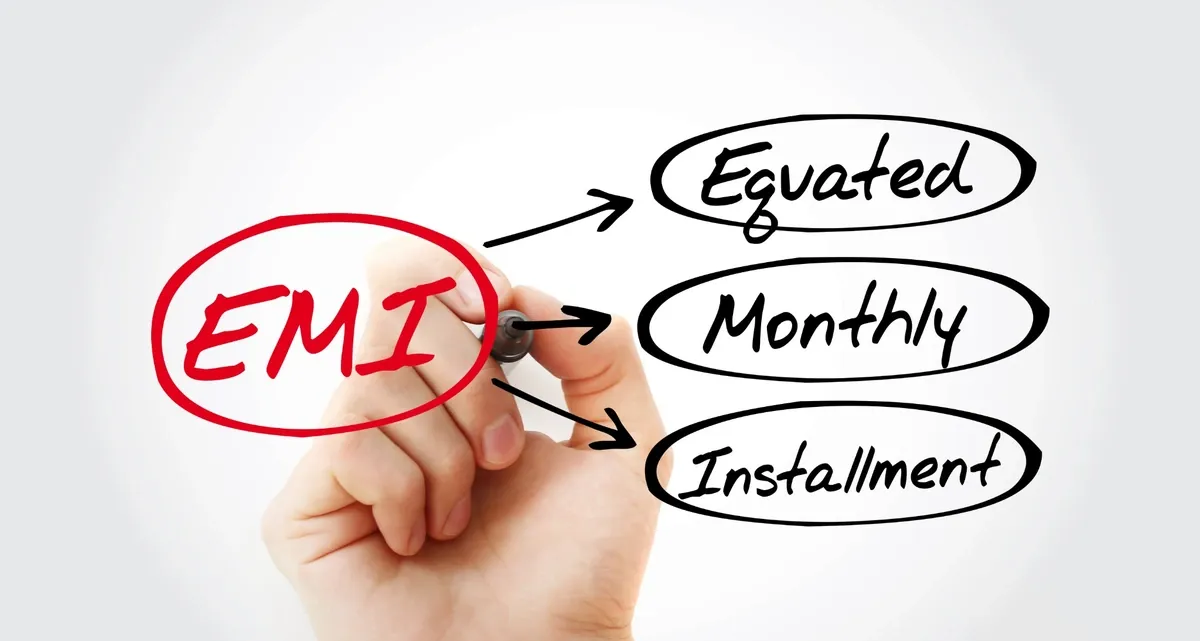
EMI (Equated Monthly Instalment) is the fixed amount you pay every month towards the home loan, subject to loan terms and interest rate type. This amount generally includes two components: principal and interest.
The principal is the actual loan amount you borrow from the bank. Interest is the cost you pay to the bank for borrowing that money. The interest amount depends on the loan amount, interest rate, tenure and outstanding balance.
Every EMI partly reduces the loan balance and partly pays interest. You may pay the same EMI each month, but the internal split between principal and interest does not remain the same throughout the loan period.
Why is the Interest Portion Higher in the Beginning?
In the early years of a home loan, the outstanding principal is high. Since interest is calculated on the outstanding loan amount, the interest portion of the EMI is also higher during this stage.
For example, if you have just started repaying a home loan, most of the loan amount is still unpaid. The bank calculates interest on this larger outstanding balance. As a result, a higher portion of the EMI goes towards interest, while a smaller portion reduces the principal.
As you continue to pay EMIs, the principal slowly comes down. Once the outstanding balance reduces, the interest charged on that balance also starts reducing. Over time, a larger part of the EMI begins to go towards principal repayment.
How Does the Break-Up Change Over Time?
The EMI break-up usually moves through three broad stages.
This changing split is an important part of home loan repayment. The EMI may seem stable, but the principal and interest components actually change in opposite directions over time.
How Can a Home Loan Calculator Help Home Buyers?
A home loan calculator can help you estimate your EMI before applying for a home loan. After entering the loan amount, interest rate and tenure, you can see the approximate monthly repayment you may need to manage. This is useful because EMI planning should not be based only on the loan amount. Two loans of the same amount can create very different repayment outcomes if the tenure or interest rate changes.
A home loan EMI calculator can help you compare different loan scenarios. You can check how the EMI changes when the tenure is increased or reduced. You can also see how a change in interest rate affects monthly repayment and total interest payable. Home loan calculators also show the total interest and total amount payable over the full tenure. This gives you a clear view of the difference between the amount you borrow and the amount you repay.
The calculator does not make the decision for you. It simply gives the numbers you need to compare options more carefully.
Where Does Prepayment Fit In?
Part-prepayment can also affect the principal and interest break-up. When you make an additional payment towards the loan, it directly reduces the outstanding principal.
Since future interest is calculated on the remaining outstanding balance, reducing the principal can lower the interest burden over time. This can be useful when done earlier in the loan tenure, as the interest portion is usually higher during the initial years.
You should also check your bank prepayment rules, especially charges, conditions and whether the prepayment reduces EMI, tenure or both.
Final Thoughts
A home loan EMI is not just a monthly payment. It is a repayment journey where the interest portion is usually higher in the beginning and the principal portion becomes stronger over time.
When you know how this break-up works, you can look at your loan beyond the EMI amount. You can compare tenure options, plan prepayments and review your loan statement with more confidence. A home loan is a long-term financial commitment. Seeing how principal and interest move through the repayment journey helps you make choices that fit both your monthly budget and long-term financial comfort.
Disclaimer:
The contents herein are only for informational purposes and generic in nature. The content does not amount to an offer, invitation or solicitation of any kind to buy or sell, and are not intended to create any legal rights or obligations. This information is subject to updation, completion, amendment and verification without notice. The contents herein are also subject to other product-specific terms and conditions, as well as any applicable third-party terms and conditions, for which Ujjivan Small Finance Bank assumes no responsibility or liability.
Nothing contained herein is intended to constitute financial, investment, legal, tax, or any other professional advice or opinion. Please obtain professional advice before making investment or any other decisions. Any investment decisions that may be made by the you shall be at your own sole discretion, independent analysis and evaluation of the risks involved. The use of any information set out in this document is entirely at the user's own risk. Ujjivan Small Finance Bank Limited makes no representation or warranty, express or implied, as to the accuracy and completeness for any information herein. The Bank disclaims any and all liability for any loss or damage (direct, indirect, consequential, or otherwise) incurred by you due to use of or due to investment, product application decisions made by you on the basis of the contents herein. While the information is prepared in good faith from sources deemed reliable (including public sources), the Bank disclaims any liability with respect to accuracy of information or any error or omission or any loss or damage incurred by anyone in reliance on the contents herein, in any manner whatsoever.
To know more about Ujjivan Small Finance Bank Products Visit:"https://www.ujjivansfb.bank.in"
All intellectual property rights, including copyrights, trademarks, and other proprietary rights, pertaining to the content and materials displayed herein, belong to Ujjivan Small Finance Bank Limited or its licensors. Unauthorised use or misuse of any intellectual property, or other content displayed herein is strictly prohibited and the same is not intended for distribution to, or use by, any person in any jurisdiction where such distribution or use would (by reason of that person's nationality, residence or otherwise) be contrary to law or registration or would subject Ujjivan Small Finance Bank Limited or its affiliates to any licensing or registration requirements.